
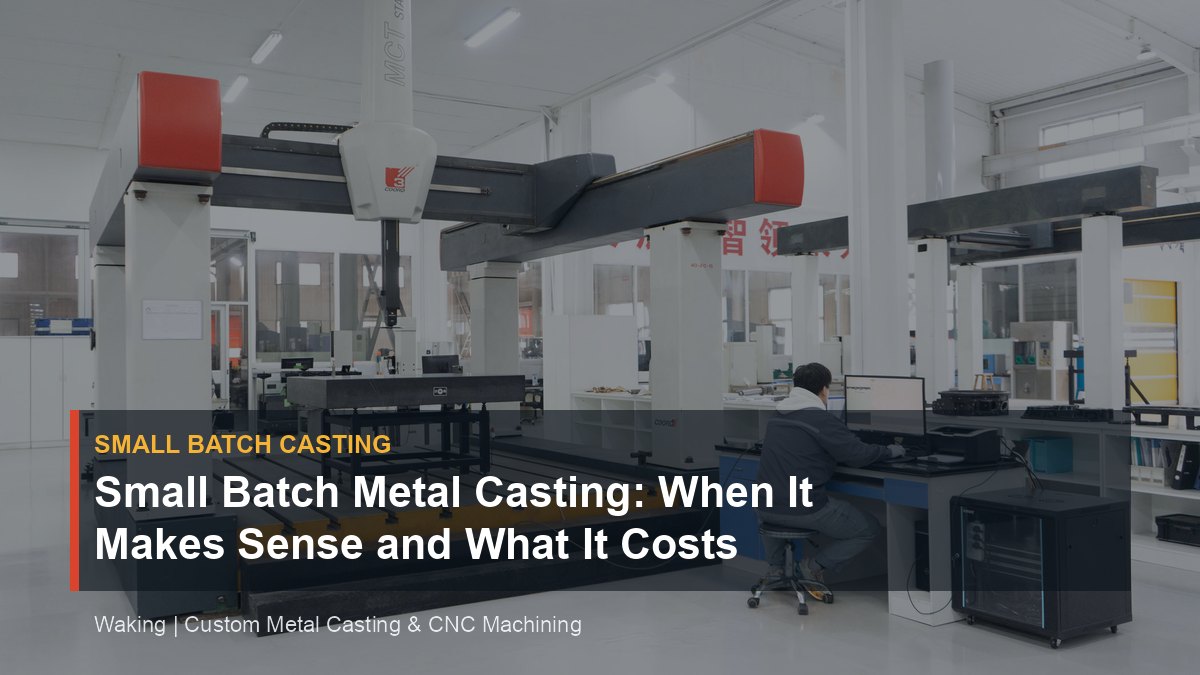
Small Batch Metal Casting: When It Makes Sense and What It Costs
Direct answer
Small batch metal casting makes sense when the buyer needs production-grade metal parts but the volume is not high enough for aggressive mass-production tooling. It can support prototypes, pilot batches, bridge production, replacement parts and specialized machinery components. The decision should not be based only on quantity. Buyers should also check geometry, material, machining scope, inspection needs, tooling reuse and whether the first batch will lead to repeat production.
Batch sizing matters on the machining side too. Waking’s production CNC machining page explains the qualification gate for OEM and batch work.
Table of Contents
- Direct answer
- Supplier scorecard
- RFQ evidence checklist
- Common mistakes and risk matrix
- Procurement checklist
- FAQ
Supplier scorecard
| Audit area | What a buyer should verify | How to check it |
|---|---|---|
| Batch purpose | Is the order a prototype, pilot batch, repair need or repeat low-volume program? | Define the purpose before asking for price. |
| Tooling route | Can soft tooling, pattern tooling or production tooling match the volume? | Ask what tooling can be reused later. |
| Machining scope | Which surfaces need CNC machining after casting? | Separate as-cast and machined features. |
| Inspection level | Does the first batch need reports, photos or sample approval? | Do not skip inspection because the quantity is small. |
| Repeat potential | Will the batch become a recurring order? | Tell the supplier so process choices are not short-sighted. |
A useful scorecard connects commercial discussion to factory reality. If the supplier cannot explain process choice, machining responsibility or inspection records, the quote may still be possible, but the buyer is accepting more risk than the price shows.
RFQ evidence checklist
| RFQ item | Why it matters | Buyer note |
|---|---|---|
| 2D drawing | Dimensions, tolerances, datums, material notes and finish requirements. | Use the latest revision and mark critical features. |
| 3D file | Geometry for tooling, parting line, machining stock and assembly review. | STEP or similar neutral files are usually easier to review. |
| Material grade | Alloy choice, standard, heat treatment and report requirements. | Avoid common names when a formal grade is required. |
| Quantity plan | Prototype, first batch, annual demand and reorder pattern. | Separating sample and production volumes improves tooling decisions. |
| Machining scope | Threads, bores, sealing faces, datums and tight fits. | Clarify what is as-cast and what must be machined. |
| Inspection scope | Critical dimensions, material reports, surface criteria and functional tests. | Attach inspection expectations before sample approval. |
For Waking projects, buyers can start by reviewing Waking manufacturing capabilities, CNC machining for cast components, casting quality inspection process, send small batch casting drawings for RFQ. These pages give the RFQ conversation a clear path instead of leaving process, machining and inspection as separate topics.
Common mistakes and risk matrix
| Mistake | Why it creates risk | Better practice |
|---|---|---|
| Treating small batch as casual work | Low quantity still needs clear drawings and acceptance rules. | Use the same RFQ discipline as production. |
| Wrong tooling economy | Cheap tooling can become expensive if repeat orders follow. | Compare one-time and repeat-batch assumptions. |
| No machining review | Small batches often still need precise final surfaces. | Mark functional features before quote. |
| No cost boundary | The buyer cannot compare casting against CNC or fabrication. | Compare total cost, not just unit price. |
Most sourcing problems begin before production. The drawing is incomplete, machining scope is assumed, inspection criteria are vague, or the supplier and buyer use the same word for different acceptance levels. The solution is not a longer email chain. The solution is a clearer RFQ packet and a supplier that is willing to question unclear details early.
How to use this guide during supplier discussion
Use this article as a working checklist, not as a one-time reading page. The buyer should first mark the non-negotiable requirements: material grade, annual quantity, critical dimensions, functional surfaces, inspection records and shipment conditions. Then compare each supplier response against those requirements. A supplier that gives a fast price but does not discuss process limits may still be useful for a simple part, but it should not be treated the same as a supplier that reviews drawings, machining stock and inspection evidence before quoting.
For production parts, the most important question is often not whether the supplier has a certain machine. The better question is how that machine fits the route from raw casting to approved shipment. A CNC machine does not solve a casting datum problem by itself. A quality certificate does not define which dimensions will be measured. A factory photo does not explain how a drawing revision is controlled. Buyers should turn every broad claim into a practical question: who checks this, when is it checked, what record proves it, and what happens if the sample does not match the drawing?
This is also where internal resources should be used deliberately. If the project is still at process-selection stage, review Waking’s capability and process pages before sending the RFQ. If the project has tight tolerances or mating surfaces, compare the machining scope with the inspection requirements. If the project is close to purchase approval, prepare the RFQ packet and use the related casting and CNC machining articles to check whether any DFM, quality or quoting details are missing. Before finalizing the RFQ, compare this requirement with prototype to production casting guide, custom metal casting manufacturer guide, custom casting RFQ checklist so process selection, DFM, quoting and inspection stay aligned. The goal is to make the supplier response easier to compare, not simply longer.
Signals that the quote is becoming reliable
- The supplier repeats the material grade, process route, machining scope and drawing revision back to the buyer.
- The quote separates tooling, sample, machining, surface finish, inspection, packaging and freight assumptions where relevant.
- The supplier identifies at least one risk or clarification question instead of pretending every drawing is ready.
- Inspection expectations are visible before sample production, including critical dimensions and documentation requirements.
- The commercial contact can explain what engineering still needs before final price or delivery promises are fixed.
Aligning purchasing, engineering and quality
Before the buyer sends the final RFQ package, someone should check that purchasing, engineering and quality are asking for the same result. Purchasing may focus on price and delivery, engineering may focus on fit and function, and quality may focus on inspection records. A casting project works better when those requirements are visible in one packet. If one department keeps a requirement only in email, the supplier may miss it during tooling, sampling or shipment preparation.
For repeat orders, keep a short record of what was learned from the first sample: drawing notes that caused questions, dimensions that needed tighter control, packaging details that protected machined surfaces, and reports the buyer actually used. That record makes the next RFQ faster and gives the supplier a clearer target for stable production.
Procurement checklist
| Timing | Action |
|---|---|
| Before RFQ | Collect drawings, CAD, material, quantity, finish and inspection notes. |
| Before tooling | Confirm DFM feedback, process choice, tooling assumptions and sample approval plan. |
| Before samples | Agree on report format, measured dimensions, surface criteria and packaging. |
| Before production | Freeze drawing revision, tolerance interpretation, delivery terms and change-control rules. |
| Before shipment | Check inspection records, material documents, labels, packaging and invoice details. |
- Confirm whether the part is mainly a casting problem, a machining problem, or a combined casting-machining problem.
- Mark critical dimensions separately from general dimensions so inspection effort goes where it matters.
- State whether samples need dimensional reports, material reports, photos, assembly checks or functional tests.
- Ask how drawing changes are controlled after tooling starts.
- Keep packaging and shipping requirements visible if the part is heavy, machined, coated or corrosion-sensitive.
Authority sources
- Google Search Central helpful content guidance
- ISO 9001 quality management
- ASTM standards
- ASME Y14.5 dimensioning and tolerancing
- NIST manufacturing and measurement resources
FAQ
What quantity counts as small batch casting?
There is no universal number. The process depends on part size, alloy, tooling, machining and whether the order will repeat.
Is casting economical for very small quantities?
Sometimes, but CNC machining or fabrication may be better for one-off parts. Casting becomes stronger when geometry, material use or repeat demand justify tooling.
Should small batches still need inspection?
Yes. A small order can still fail if dimensions, material or surface requirements are unclear.
What should buyers send first?
Send drawings, CAD, material grade, quantity range, machining scope, finish, inspection needs and whether repeat orders are expected.
Frequently Asked Questions
Does it make sense to use small batch metal casting for a first prototype run before final design?
Yes, if the buyer needs production-grade metal parts but volume is not high enough for mass-production tooling. The buyer should define whether the order is a prototype, pilot batch, or repeat low-volume program, and ask which soft tooling, pattern tooling, or production tooling can match the volume and be reused later. Even for a small quantity, the drawing, machining scope, and inspection level should still be fixed before quote.
How do I specify which surfaces must be CNC machined after casting?
Mark the functional features such as threads, bores, sealing faces, datums, and tight fits on the 2D drawing and 3D file. Separate as-cast features from machined features during RFQ. Waking can review machining stock and perform CNC machining in the same factory, but the buyer should clarify machining responsibility and acceptance before sample approval.
What inspection evidence should I require for a small batch order?
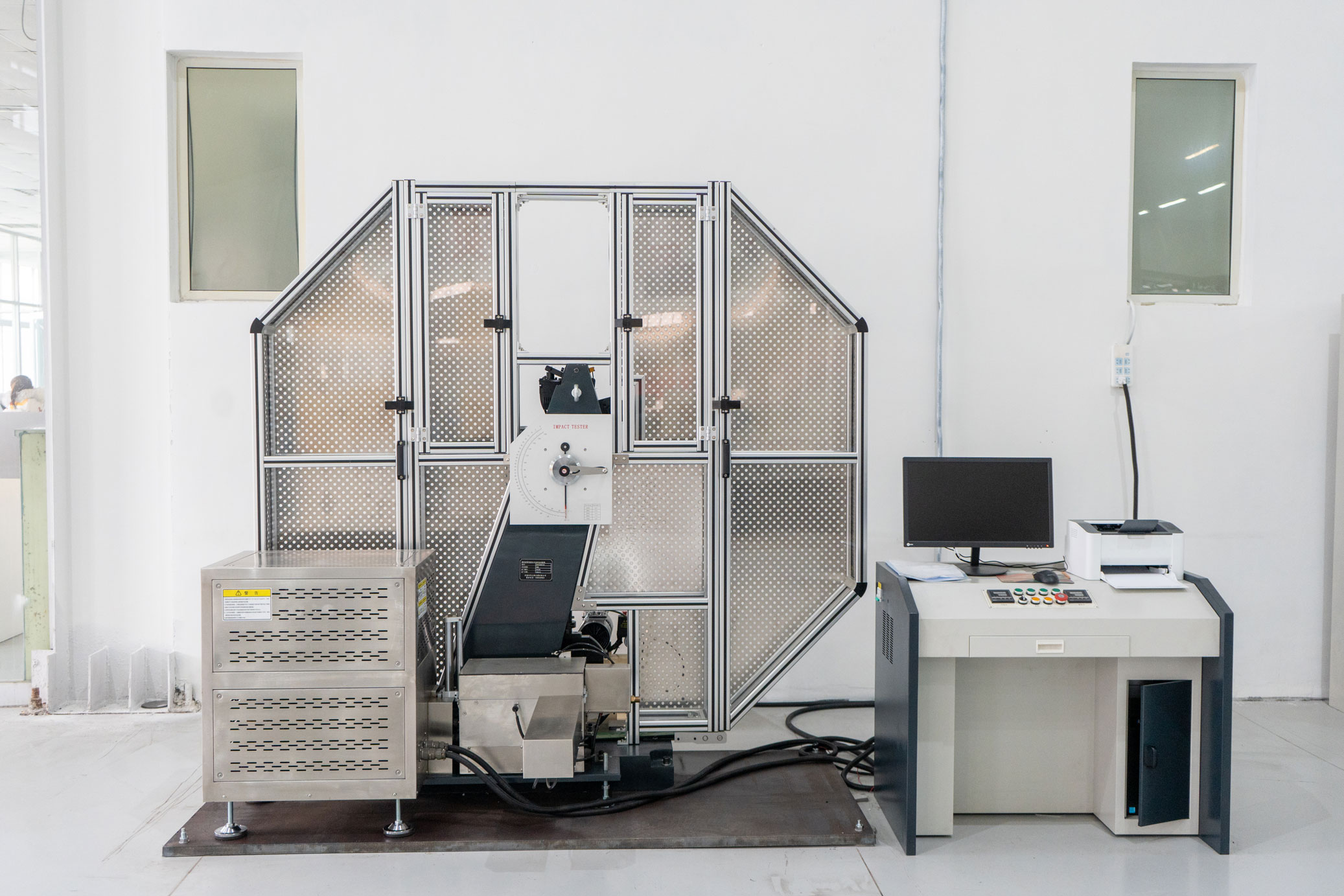
Do not skip inspection because the quantity is small. Attach inspection scope for critical dimensions, material reports, surface criteria, and functional tests. Waking can support first article inspection, sample approval, CMM measurement, X-ray NDT, hardness testing, impact testing, leak testing, and batch traceability with material certificates.
Which materials and casting processes can Waking offer for small batch parts?
Waking uses in-house investment casting, low pressure aluminum casting, and gravity aluminum casting, with CNC machining in the same factory. Available material grades are stainless steel 304/316/CF8/CF8M, carbon steel, alloy steel, and aluminum alloy. Post-processing options include deburring, cleaning, polishing, anodizing, plating, passivation, coating, and heat treatment.
Key Parameters at a Glance
| Parameter | Details relevant to small batch RFQ |
|---|---|
| Casting process | Investment casting, low pressure aluminum casting, gravity aluminum casting (all in-house) |
| Material grades | Stainless steel 304/316/CF8/CF8M; carbon steel; alloy steel; aluminum alloy |
| Machining scope | Separate as-cast and machined features; CNC machining available on site |
| Post-processing | Deburring, cleaning, polishing, anodizing, plating, passivation, coating, heat treatment |
| Inspection equipment | CMM (COORD3/ZEISS SPECTRUM), X-ray NDT (XTH320), inverted metallurgical microscope, roundness/contour measurement, hardness tester, impact test, FAI, sample approval, leak testing, batch traceability + material certificate |
| Applications | Pump/valve bodies, impellers, automotive/mechanical housings, industrial machinery parts |
